
Encanto beautifully brings Colombian culture to life through its vibrant colors, joyful music, and use of the Spanish language. Beyond its artistry, the film captures something deeply universal — the complex inner workings of family life. Through rich symbolism and archetypes, Encanto invites us to see our own families reflected in its story: the living casita that symbolizes the health of the family system, the glowing candle that represents the family’s “miracle”, and the unique “gifts” that mirror the archetypal roles we each take on within our families. These roles often develop to keep a sense of harmony and order, especially in the face of pain or loss. Yet, they can also support passed down family meanings and patterns that are flawed. Encanto offers not just a story of magic, but a reflection on how love, duty, and silence can all intertwine to shape a family’s legacy.
Each member of the Madrigal family represents an archetype we often see in families — the roles we play to support the balance of the whole system. There’s Luisa, the strong one, who carries the burdens of others and measures her worth on how much she can carry. Isabela, the beauty, feels pressure to be perfect even when it comes at the expense of her authenticity. Bruno, the outcast, holds the truths the family isn’t ready to face. Tia Pepa, the emotional one, whose moods change like the weather and affect everyone around her. And Mirabel, the one without a “gift,” becomes the mirror — the one who sees what’s hidden and longs to heal what’s been broken. Each of these archetypes reflects the unconscious ways families adapt to maintain balance, protect themselves from pain, and preserve connection.
In the movie, as the casita begins to crack and the miracle candle starts to flicker, Maribel embarks on the hero’s journey to try and figure out what is happening to the family and how to fix it in order to save their miracle. On the hunt for clues, Maribel begins to understand her family members’ unique pressures of keeping the family miracle alive. She sees how their “gifts” have been utilized to serve the family, but she also sees how they are struggling to carry the heavy burden, often losing themselves. Maribel begins to understand how the pressure is causing cracks in the foundation of their system. The miracle candle begins to fade as the family members get burnt out with their roles.
Maribel tries to inform her grandmother of her discovery, only to be met with her grandmother’s need to scapegoat her as the “family problem”. Maribel confronts her
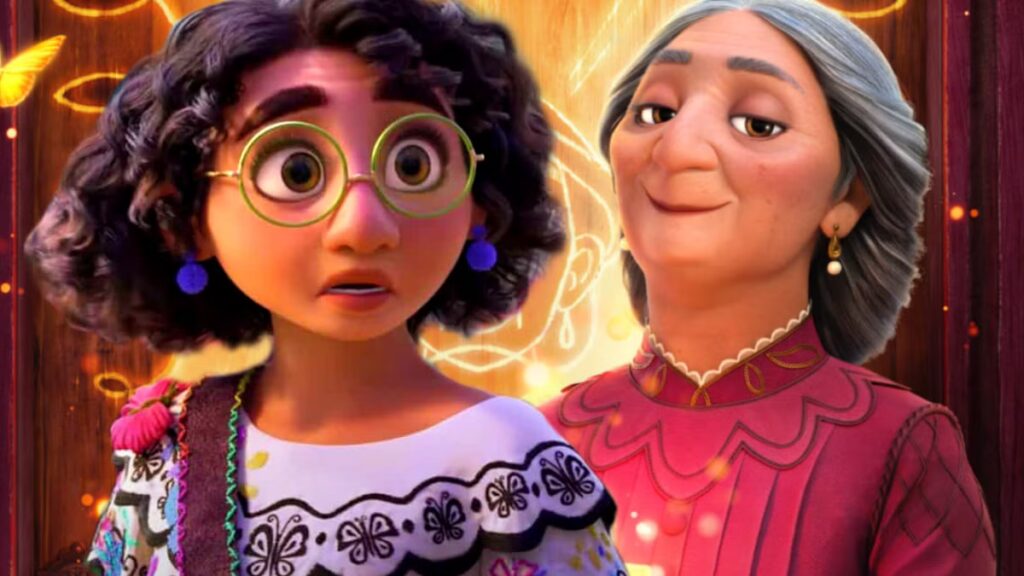
grandmother, “I will never be good enough for you. Will I?” She expands on her new insight and tells Abuela Alma that no one in the family has ever been good enough for her, no matter how hard they try.
The house collapses and the candle goes out. Alma is forced to reflect. She then finds Maribel and shares her story.
The movie takes the audience back to Alma’s memories of being a young woman who falls in love and builds a family with her husband, Pedro. This beautiful and emotionally filled montage of Alma and Pedro’s love story, as they build a family and welcome home their children, is juxtaposed with a heartbreaking scene of loss. The young family’s village is invaded by enemy soldiers and they have to flee. Pedro is killed in their escape and Alma is left, alone, with their children to raise.
Trauma freezes time. There is a terror in what has happened and a tendency to perseverate on making sure that it never happens again, even when the threat is no longer present. When life moves on, the psyche struggles to move on with it. It becomes stuck in the past; continually bringing it into the present. That obsession around terror becomes lived, peaking in and out of consciousness.
When Pedro dies, the magical house and candle appear to Alma. She tells Maribel that she was given a miracle, and that she has been living in the fear of losing it just as she had lost Pedro. In an attempt to mitigate her fears, Alma realizes that she had become stuck in a mode of survival. The family had been living with a cloud of fear that had grown too big. No one would ever be good enough to vanquish it, because it happened in the past. The past experience of trauma for Alma was continuing to live both in her and in the generations that followed her.
Encanto plays “Dos Oruguitas”, meaning two little caterpillars, as Alma tells her story to Maribel. The song reflects on themes of loss, change, and rebirth. Alma begins to see that the “miracle” she was given was not about a magic house or candle, but that the miracle was the survival of her children and the continued growth of her and Pedro’s family through their grandkids and lives they had built together. Through reflection, the pain of the past was able to lessen, thus making her able to refocus on her present and join her family as they rebuild a new casita together.
Encanto is a reflection of the ways we all try to hold our families together — through strength, perfection, silence, or sacrifice. The Madrigals show us how easily pain can become inherited, woven into our roles and expectations until we forget where it began. But they also show that healing doesn’t come from perfection or performance — it comes from honesty, reflection, and understanding. When we begin to name the patterns we’ve carried, we create the space to release what no longer belongs to us. In doing so, we honor both the generations before us and the ones still to come.

I love this so much!!! Thank you for writing and sharing.
Beautifully written!